
Losing a tooth can affect much more than the appearance of your smile. A missing tooth may make chewing uncomfortable, change the way you speak, or cause neighboring teeth to gradually move into the open space. Over time, an untreated gap can affect your bite and make maintaining a healthy smile more challenging.
Fortunately, replacing a missing tooth does not always require complicated treatment. Dental bridges are a well-established restorative option that can fill the space left by one or more missing teeth while restoring a more natural-looking smile.
At Affinity Family Dental Avon, restorative dentistry is centered around personalized care. The practice offers comprehensive dental services and takes the time to understand each patient’s needs before recommending an appropriate treatment approach.
If you are considering a dental bridge in Avon, IN, understanding how bridges work, their benefits, and what treatment involves can help you make a confident decision.
What Is a Dental Bridge?
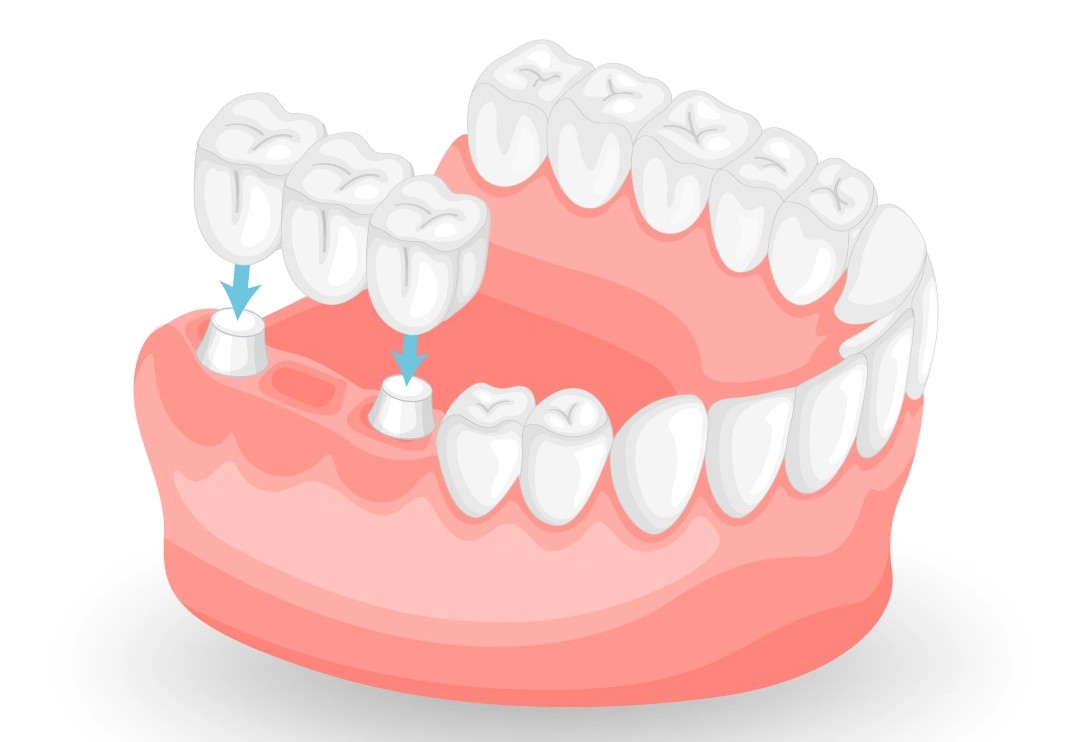
A dental bridge is a fixed dental restoration designed to replace one or more missing teeth.
A traditional bridge generally consists of three main components:
- Abutment teeth: The natural teeth supporting the bridge on either side of the gap.
- Pontic: The artificial replacement tooth or teeth that fill the missing space.
- Dental crowns: These fit over the supporting teeth and hold the bridge securely in position.
Depending on your oral health and the location of the missing tooth, other bridge designs may be appropriate. Some bridges can also be supported by dental implants rather than natural teeth.
The goal is to create a restoration that blends naturally with your existing teeth while helping restore everyday oral function.
Why Replace a Missing Tooth?
It can be tempting to leave a missing tooth alone, especially if it does not cause immediate discomfort. However, the surrounding teeth can gradually shift toward the empty space.
Replacing the tooth may help:
- Restore your natural-looking smile
- Make chewing more comfortable
- Support clearer speech
- Maintain proper tooth alignment
- Distribute biting forces more evenly
- Support the overall structure of your smile
A dental bridge can therefore provide both cosmetic and functional benefits.
What Types of Dental Bridges Are Available?
There is no single bridge design that works for everyone. Your dentist will consider the location of the missing tooth, the condition of surrounding teeth, your bite, and your overall oral health when determining which approach may be appropriate.
Traditional Fixed Bridge
A traditional bridge is one of the most commonly used designs. It is supported by crowns placed over prepared teeth on either side of the missing tooth.
This option may be appropriate when the neighboring teeth are healthy and strong enough to provide reliable support.
Cantilever Bridge
A cantilever bridge is supported from one side rather than both sides of the missing tooth.
Because the forces placed on a bridge depend heavily on its location, this type of restoration is only appropriate in certain situations.
Maryland Bridge
A Maryland bridge uses a framework or wings attached to the back of nearby teeth to support the replacement tooth. It can be a more conservative option in selected cases.
Implant-Supported Bridge
An implant-supported bridge uses dental implants rather than natural teeth as its foundation.
This approach may be considered when several adjacent teeth are missing and the patient is a suitable candidate for implants.
Your dentist can explain the advantages and limitations of each option and recommend the solution that best fits your smile.
What Are the Benefits of Dental Bridges?
A dental bridge can do more than close an unwanted gap.
1. Restore Your Smile
A missing tooth can make you feel uncomfortable when smiling or speaking. A carefully designed bridge can provide a more complete, natural-looking appearance.
2. Improve Chewing
Missing teeth can make it difficult to chew certain foods comfortably. Replacing the missing tooth helps restore the functional surface needed for everyday eating.
3. Support Proper Alignment
When a tooth is missing, neighboring teeth may gradually move into the open space. Replacing the tooth can help maintain the existing arrangement of your teeth.
4. Support Your Bite
Your teeth work together as a system. Replacing missing teeth can help distribute biting forces more appropriately across the smile.
5. Restore Confidence
Sometimes the most noticeable benefit is simply feeling comfortable smiling again. Restoring a missing tooth can make social interactions, conversations, and photographs feel more natural.
Who May Be a Good Candidate for a Dental Bridge?
A dental bridge may be an option for patients who have one or more missing teeth and have adequate support from surrounding teeth or dental implants.
Before recommending a bridge, your dentist will evaluate factors such as:
- The number and location of missing teeth
- The health of neighboring teeth
- Gum health
- Your bite and jaw function
- Existing dental restorations
- Your overall oral health
- Your long-term treatment goals
If the supporting teeth or gums require treatment first, addressing those concerns may be an important part of the overall restorative plan.
What Is the Dental Bridge Procedure Like?
The exact process depends on the type of bridge you receive. For a traditional fixed bridge, treatment commonly involves several stages.
Step 1: Consultation and Evaluation
Your dentist examines your teeth, gums, bite, and the area where the tooth is missing. This helps determine whether a bridge is appropriate and which design may work best.
Step 2: Preparing the Supporting Teeth
For a traditional bridge, the supporting teeth may be carefully prepared to accommodate the crowns that will hold the restoration.
Step 3: Creating Your Restoration
Measurements or digital scans are used to design a bridge that fits your mouth and complements the appearance of your natural teeth.
Step 4: Temporary Restoration
Depending on your treatment plan, a temporary restoration may be placed while your permanent bridge is being prepared.
Step 5: Placement of the Permanent Bridge
Once the permanent bridge is ready, your dentist checks its fit, appearance, and bite. After any necessary adjustments, the restoration is secured in place.
Your dental team will also explain how to care for your new bridge and keep the surrounding teeth and gums healthy.
How Long Does a Dental Bridge Last?
A dental bridge is designed as a long-term restoration, but its lifespan can vary from patient to patient.
Factors that can influence how long a bridge lasts include:
- Oral hygiene
- Gum health
- The condition of supporting teeth
- Bite forces
- Diet and lifestyle habits
- Regular dental examinations
- Proper bridge cleaning
Good daily care and routine dental visits can help protect your bridge and the teeth supporting it.
How Do You Care for a Dental Bridge?
Taking care of a bridge is similar to caring for your natural teeth, but cleaning underneath and around the restoration is especially important.
Maintain Good Oral Hygiene
Brush your teeth twice a day and clean around the bridge carefully.
Clean Beneath the Bridge
Food and plaque can collect beneath the replacement tooth. Your dental team can show you appropriate flossing or cleaning techniques for the specific bridge you receive.
Schedule Regular Dental Visits
Routine examinations allow your dentist to monitor the bridge, supporting teeth, and surrounding gum tissue.
Avoid Excessive Force
Avoid biting extremely hard objects or using your teeth as tools. Excessive pressure can damage natural teeth and dental restorations.
Dental Bridges vs. Other Tooth Replacement Options
A bridge is only one way to replace missing teeth. Depending on your circumstances, your dentist may also discuss dentures or dental implants.
Dental Bridges
Bridges are fixed restorations that can replace missing teeth without requiring a removable appliance.
Dental Implants
Implants replace the root portion of a missing tooth and can support individual crowns, bridges, or other restorations. Affinity Family Dental Avon also provides dental implant services as part of its comprehensive dental care offerings.
Dentures
Dentures are removable restorations that can replace several missing teeth or, in appropriate cases, an entire arch.
The right choice depends on your oral health, the number of missing teeth, your preferences, and your long-term goals. A dental consultation is the best way to compare these options.
How Much Does a Dental Bridge Cost?
The cost of a dental bridge varies because every patient’s treatment is different. Factors may include the type of bridge, materials selected, the number of teeth being replaced, the condition of the supporting teeth, and whether additional dental treatment is needed.
Dental insurance may cover part of restorative treatment depending on your individual plan.
Rather than relying on a general price estimate, discuss your specific treatment plan and expected costs with your dental team before beginning treatment.
Frequently Asked Questions About Dental Bridges
Is a dental bridge removable?
Most traditional dental bridges are fixed restorations. They are secured to supporting teeth and are not intended to be removed by the patient.
Can a bridge replace more than one tooth?
Yes. Depending on the location and condition of the surrounding teeth, a bridge can replace multiple adjacent missing teeth.
Will my dental bridge look natural?
Modern dental materials allow bridges to be designed to complement the color, shape, and proportions of your existing teeth. Your dentist will consider your individual smile when planning the restoration.
Is getting a dental bridge painful?
Your dentist will use appropriate techniques to keep you comfortable throughout treatment. Some sensitivity or adjustment may occur afterward, but your dental team will provide instructions for caring for the area.
Can I eat normally with a dental bridge?
Once you have adjusted to your new restoration and your dentist confirms that it is functioning properly, a bridge is designed to help you chew more normally. Your dental team may recommend avoiding particularly hard or sticky foods that could damage the restoration.
Should I choose a bridge or dental implant?
Neither option is automatically best for everyone. Your dentist can evaluate your oral health, surrounding teeth, bone support, and long-term goals before recommending the most appropriate tooth replacement solution.
Restore Your Smile With Personalized Dental Care in Avon, IN
A missing tooth does not have to become a permanent part of your smile. With the right restorative treatment, you can regain a more complete smile and improve everyday functions such as chewing and speaking.
At Affinity Family Dental Avon, patient-focused care is at the center of the dental experience. The practice provides restorative services including bridges, crowns, fillings, and same-day crowns, along with dental implants and other comprehensive dental treatments.
If you are living with a missing tooth or an uncomfortable gap, schedule a consultation to discuss whether a dental bridge in Avon, IN could be right for you.