
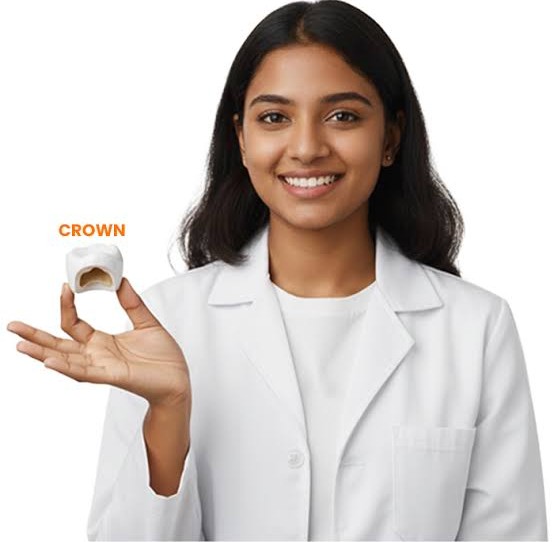
A single damaged tooth can throw off your whole smile. Maybe it’s a molar that cracked while you were chewing on something hard, a tooth that’s been worn thin over the years, or one that’s simply seen too many fillings to hold up much longer. Whatever the cause, a weakened tooth doesn’t just look different — it can make eating uncomfortable and leave you worried about further damage.
That’s where dental crowns come in. At Affinity Family Dental Avon, crowns are one of the most reliable tools in restorative dentistry, used every day to rebuild teeth that have lost their strength or shape. If you’ve been told you might need a crown, or you’re simply curious about what the process involves, here’s what you should know before your visit.
What Is a Dental Crown, Exactly?
Think of a dental crown as a custom-made cap that fits snugly over an existing tooth, covering it completely from the gumline up. Unlike a filling, which only fills in a small portion of a tooth, a crown surrounds the entire visible surface. This makes it an ideal solution when a tooth has lost too much structure to be repaired any other way.
Crowns aren’t just functional — they’re designed to blend in. Modern materials can be shaped and shaded to match the rest of your smile, so once your crown is placed, it should look and feel like a natural part of your bite.
Why Might You Need a Crown?
There isn’t just one reason patients end up needing a crown. Some of the most common situations include:
- A cracked or fractured tooth that needs reinforcement to prevent it from breaking further
- Significant tooth decay that’s too extensive for a standard filling
- A tooth that’s had a root canal, which often becomes more brittle over time
- Large or failing fillings that no longer provide enough support
- Cosmetic concerns, such as a tooth that’s discolored or oddly shaped
- Support for a dental bridge, since crowns are often used to anchor bridges in place
If your dentist has recommended a crown, it’s usually because a filling or other minor repair simply won’t hold up to daily biting and chewing.
What Are Dental Crowns Made Of?
There isn’t a single “best” material for every patient — the right choice depends on the location of the tooth, your bite, and your aesthetic preferences. Common options include:
- Porcelain or ceramic, prized for their natural, tooth-like appearance
- Metal alloy, known for exceptional strength, often used on back teeth
- Porcelain fused to metal, which combines durability with a more natural look
- Zirconia, a strong and increasingly popular option for both function and appearance
- Composite resin, sometimes used for a more budget-conscious solution
Your dentist will walk you through which material makes the most sense for your specific tooth and lifestyle.
What to Expect During the Crown Process
Getting a crown is a well-established process, and knowing what’s ahead can make the experience feel far less intimidating.
Step 1: Consultation and Exam
Your dentist will examine the tooth in question, possibly take X-rays, and confirm that a crown is the right approach before moving forward.
Step 2: Preparing the Tooth
The tooth is gently reshaped to make room for the crown. Any decay is removed first, and the surrounding area is numbed so you stay comfortable throughout.
Step 3: Impressions or Digital Scans
Precise measurements of your tooth are taken, either with a traditional mold or a digital scanner, so your crown can be crafted to fit perfectly.
Step 4: Temporary Crown
While your permanent crown is being custom-made, a temporary one is placed to protect the tooth and keep you comfortable in the meantime.
Step 5: Permanent Placement
Once your custom crown is ready, your dentist checks the fit, color, and bite before securing it in place with dental cement.
Some practices also offer same-day crown technology, which allows a crown to be designed and placed in a single visit rather than waiting for a dental lab. If a faster timeline matters to you, it’s worth asking your dental team what options are available.
Benefits of Getting a Dental Crown
A crown does more than patch up a problem tooth. Patients often notice:
Protection from further damage. A crown shields a weakened tooth from the everyday pressure of chewing, helping prevent cracks from worsening.
A more confident smile. Because crowns can be color-matched to your surrounding teeth, they blend in rather than standing out.
Restored chewing function. Once your crown is in place and you’ve adjusted to it, eating should feel comfortable and natural again.
Long-term reliability. With good oral hygiene and regular checkups, a well-placed crown can last many years.
How Long Do Dental Crowns Last?
Most crowns last somewhere between 5 and 15 years, and sometimes longer, depending on the material used and how well the tooth is cared for. Grinding your teeth, poor oral hygiene, or biting down on hard objects can shorten a crown’s lifespan, while regular brushing, flossing, and dental visits can help it go the distance.
Caring for Your Crown
A crowned tooth still needs the same attention as your natural teeth. A few simple habits go a long way:
- Brush twice daily and floss around the crown just as you would a natural tooth
- Avoid chewing on ice, pens, or other hard objects that could crack the restoration
- Wear a nightguard if you tend to grind your teeth while sleeping
- Keep up with routine dental exams so your dentist can catch any issues early
Frequently Asked Questions
Is getting a dental crown painful? Your dentist will numb the area before preparing the tooth, so the procedure itself shouldn’t be painful. Some mild sensitivity afterward is normal and typically fades within a few days.
How much does a dental crown cost? Cost varies based on the material chosen, the location of the tooth, and whether any additional treatment is needed beforehand. Your dental team can walk you through pricing and insurance coverage during your consultation.
Can a crown be placed in one visit? In many cases, yes — some offices offer same-day crown technology. Traditional crowns, however, typically require two visits: one to prepare the tooth and place a temporary crown, and a second to place the permanent restoration.
Will my crown look like a natural tooth? Yes. Materials like porcelain and zirconia can be shaped and shaded to closely match your existing teeth, so the crown blends in rather than looking artificial.
What’s the difference between a crown and a filling? A filling repairs a small, localized area of a tooth, while a crown covers the entire visible portion. Crowns are used when there isn’t enough healthy tooth structure left for a filling to be effective.
Rebuild Your Smile at Affinity Family Dental Avon
A damaged or weakened tooth doesn’t have to compromise your smile or your comfort. Dental crowns offer a dependable way to restore both the strength and appearance of a struggling tooth, often preserving it for years to come.
At Affinity Family Dental Avon, patient-centered care guides every step of treatment, from your first consultation through the final fitting of your crown. If you have a tooth that’s cracked, worn, or simply not holding up the way it used to, schedule a consultation with our team today to find out whether a dental crown in Avon, IN is the right solution for you.